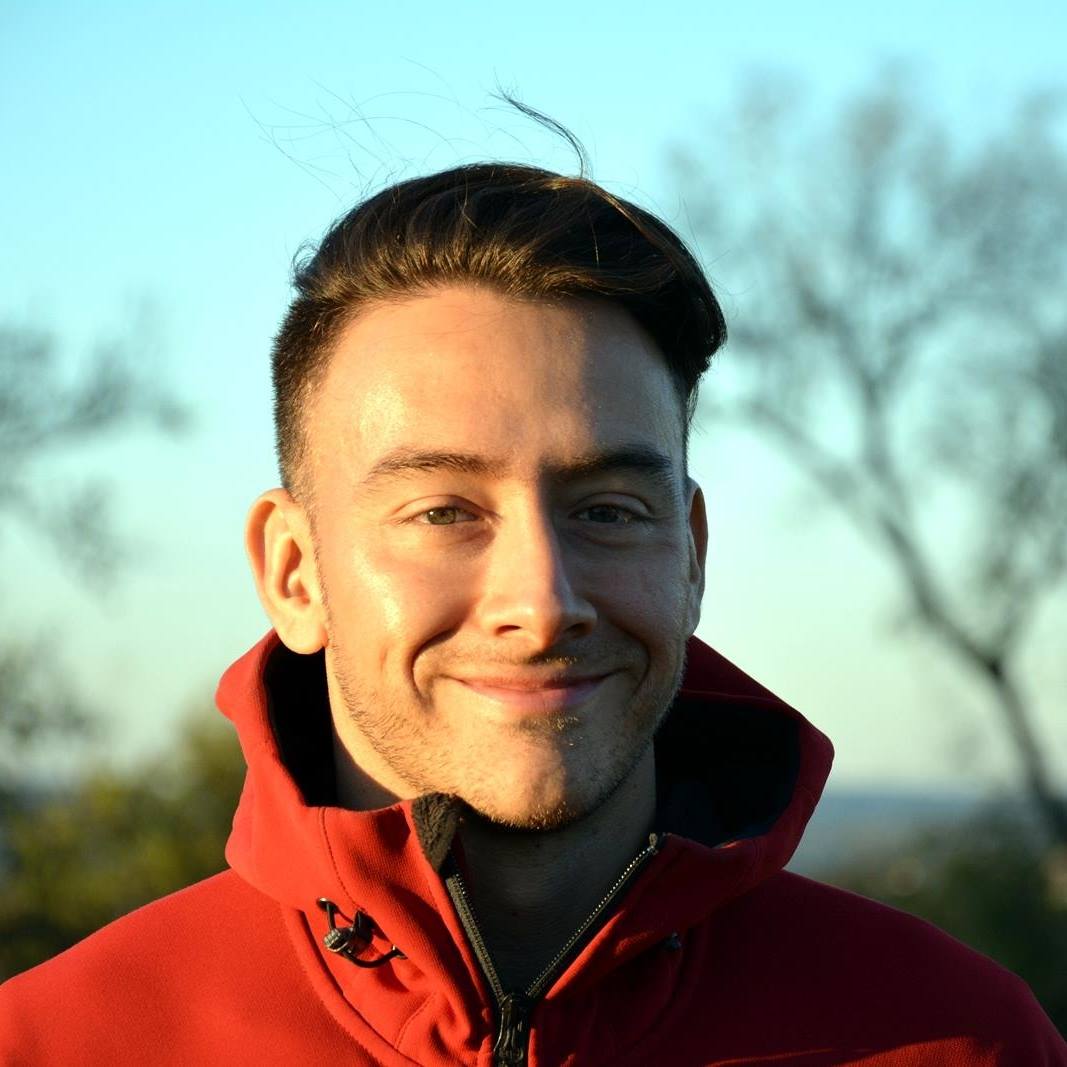
I’m Richard Galvez — an AI/ML researcher and systems architect with a Ph.D. in Physics. I currently serve as Director of Applied AI at Pure Storage, where I research petabyte-scale storage systems for frontier AI training and inference pipelines, and as AI/ML Research Faculty Lead at NASA’s Frontier Development Lab, where I’ve led teams building live data pipelines for foundation model training from NASA’s Solar Dynamics Observatory.
My career has taken me from theoretical physics and supersymmetric quantum field theory to the frontiers of applied AI — through postdocs at NYU and Vanderbilt, leading AI research at robotics and health-tech startups, founding a company (DataTalk AI, acquired by Percipio Health), and now working on the infrastructure that powers large-scale AI systems.
My research interests span AI safety and alignment, scaling laws, neural network theory, statistical mechanics approaches to neural networks, distributed training at scale, and performance benchmarking.
Select Publications
Machine Learning & AI Systems
- R. Galvez, et al., “El Caliente: An AI Workload Storage Benchmark for Distributed System Performance,” in prep (2026).
- R. Galvez, et al., “A Machine Learning Dataset Prepared From the NASA Solar Dynamics Observatory Mission,” ApJ Supplements (2019).
- A. Szenicer, R. Galvez, et al., “A Deep Learning Virtual Instrument for Monitoring Extreme UV Solar Spectral Irradiance,” Science Advances (2019).
- M. Indaco, R. Galvez, et al., “Virtual EVE: a Deep Learning Model for Solar Irradiance Prediction,” NeurIPS ML & Physical Sciences Workshop (2023).
- M. Cranmer, R. Galvez, et al., “Modeling the Gaia Color-Magnitude Diagram with Bayesian Neural Flows,” Astrophysical Journal Letters (2020).
- N. Hinkel, R. Galvez, et al., “A Recommendation Algorithm to Predict Exoplanet Host Stars,” Nature Astronomy (2018).
Physics & High Performance Computing
- R. Galvez, R. J. Scherrer, “Cosmology with Independently Varying Neutrino Temperature,” Phys. Rev. D (2016).
- R. Galvez, “Kahler Moduli Inflation in Type IIB Compactifications,” Phys. Rev. D 94, 103521 (2016).
- S. Catterall, R. Galvez, et al., “Phase Structure of Lattice N=4 Super Yang-Mills,” JHEP (2012).
- R. Galvez, G. van Anders, “Accelerating Shifted Linear Systems with CUDA,” arXiv:1102.2143 (2011).
Full publication list available on arXiv.
Highlights
- TedX Speaker — “What is Dark Matter, Anyway?” (2016)
- Harvard Society of Fellows nominee (2015–2017)
- Visiting Researcher at CERN, Geneva — CMS experiment (2007)
- NSF EAPSI Fellow — University of Auckland, New Zealand (2013)
- 40+ national & international research presentations
- Languages: Spanish (native), French & Italian (intermediate)
Guiding Philosophies
Racism, discrimination, and oppression have no place in the modern world. All people, regardless of position, age, sex, origin, sexual orientation, or any other factor should be treated with the respect and dignity they deserve. Much of my daily effort is directed toward the fight for equality.
Open Science. Sharing ideas openly accelerates the advancement of knowledge. I aim to share code, derivations, and data alongside publications — especially to help those just starting out.
Access to quality education leads to a better world. If more people have access to quality educational resources and scientifically valid information, the world becomes a safer and more progressive place.
In mentorship, industry is not failure. I strongly dislike the academic sentiment that students entering industry are “failures.” If I mentored a student who was hired by a top company, I would be exceptionally proud. This mindset is not only short-sighted but damaging to science.
Communicate your work. Scientists and engineers should share their work with the public as often as possible — to inspire new generations and to ultimately advance the questions of the day.
I also like to get pictures of myself doing handstands around the world: